Edo Tokyo & Japanese Culture Tour with Government Licensed Guide

5.0
6 hours
Home Tokyo Tours Edo Tokyo & Japanese Culture Tour with Government Licensed Guide Book Now →

Overview

What's Included

✓ Included

  • Meet up with guide on foot within designated area of Tokyo
  • Licensed Local English Speaking Guide
  • Customizable Tour of your choice of 3-4 sites from 'What to expect' list

✗ Not Included

  • Transportation fees, Entrance fees, Lunch, and Other personal expenses
  • Private Vehicle
  • You cannot combine multiple tour groups.
  • Guide Entry fees are only covered for sights listed under What to Expect.

Itinerary

1
Stop 1
**This tour does not include access to the inside of the Imperial Palace** The current Imperial Palace (皇居, Kōkyo) is located on the former site of Edo Castle, a large park area surrounded by moats and massive stone walls in the center of Tokyo, a short walk from Tokyo Station. It is the residence of Japan's Imperial Family. Edo Castle used to be the seat of the Tokugawa shogun who ruled Japan from 1603 until 1867. In 1868, the shogunate was overthrown, and the country's capital and Imperial Residence were moved from Kyoto to Tokyo. In 1888 construction of a new Imperial Palace was completed. The palace was once destroyed during World War Two, and rebuilt in the same style, afterwards.
2
Stop 2
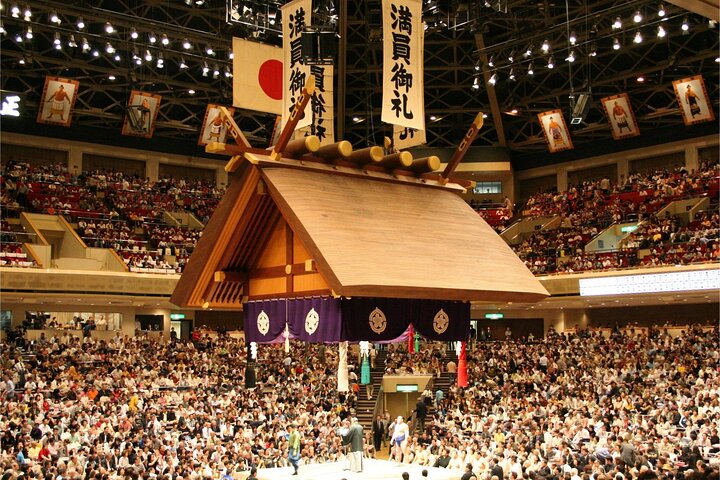
Ryogoku (両国, Ryōgoku) is a district of Tokyo where the sumo stadium, many sumo stables, chanko restaurants and other sumo related attractions can be found. It is the center of the sumo world. Sumo events have been staged in this area for a long time, but until the beginning of the 20th century, sumo tournaments were held outdoors at shrines and temples. In 1909, the first permanent sumo hall was built in the Ryogoku area. Today's sumo stadium, the current Kokugikan, is the fourth built in Tokyo and has been in use since 1985. It seats over 10,000 visitors and hosts three of the six annual sumo tournaments (in January, May and September).
3
Stop 3
The Sumida Hokusai Museum (すみだ北斎美術館, Sumida Hokusai Bijutsukan) is a museum dedicated to the ukiyo-e artist Katsushika Hokusai, commonly referred to as Hokusai. His most well-known works include The Great Wave off Kanagawa and Red Fuji, which are a couple of prints from the collection Thirty-Six Views of Mount Fuji. The museum was opened in November 2016 in Tokyo's Sumida Ward where Hokusai was born and where he spent most of his life.
4
Stop 4
Learn about the Great Kanto earthquake and how to city of Tokyo rebuilt.
5
Stop 5
Enjoy some Tokyo style dishes in this food court that is styled to look like Edo period Japan.
6
Stop 6
Nihonbashi was once the starting point of five main roads that ran through and across Japan and prospered as the center of Edo, the present-day Tokyo. Nihonbashi still has an old and traditional Japan's feel to it while continues to develop as a modern town. One of its charms is an easy access from Tokyo station; it only takes less than 10-minute walk to get to Nihonbashi.
7
Stop 7
The Sumida River (Sumidagawa) is one of Tokyo's main rivers, and the most familiar Tokyo river to visitors. The Sumida River starts directly north of Tokyo, then out eastward through eastern Tokyo.
8
Stop 8
Located in western Tokyo, the Edo-Tokyo Open Air Architectural Museum offers an off-the-beaten-track look at Japanese culture. The museum was established in 1993 by the Tokyo Metropolitan Government. Despite its young age, the architectural park serves as a cultural center with centuries-old buildings relocated and preserved on its grounds. Spend hours exploring historical buildings and discover the cultural heritage behind their walls.
9
Stop 9
The Fukagawa Edo Museum in Tokyo offers a unique glimpse into life during the Edo period (1603–1868). Unlike traditional museums, it recreates an entire Edo-era neighborhood with streets, houses, shops, and a canal, allowing visitors to walk through history. Interiors are furnished with period-appropriate items, and staff sometimes dressed in Edo-style clothing provide explanations and demonstrations. Exhibits showcase traditional crafts, festivals, and daily life, from samurai residences to commoners’ homes. Interactive elements let visitors explore and experience history firsthand. This immersive museum is perfect for families, students, and anyone interested in Japanese culture and history.

Good to Know

  • Service animals allowed
  • Public transportation options are available nearby
  • Infants and small children can ride in a pram or stroller
  • All areas and surfaces are wheelchair accessible
  • Transportation options are wheelchair accessible
  • Wheelchair accessible
  • Suitable for all physical fitness levels
  • This is a walking tour. Pick up is on foot.

Known For:

Traveler Reviews

5.0
⭐ Top Rated 🏆 Travelers' Choice ✅ Free Cancellation

You Might Also Like

Where to Stay in Tokyo

Handpicked hotels near your tour — book with confidence.

浅草複式アパートメント民宿 最大10人

浅草複式アパートメント民宿 最大10人

📶 Free WiFi
2.3 Reviewed
$27,848 /night
View Deal →
Private Villa Sinjuku -7min to 高田馬場駅

Private Villa Sinjuku -7min to 高田馬場駅

📶 Free WiFi
8.8 Excellent
$4,011 /night
View Deal →
ELM Takadanobaba

ELM Takadanobaba

📶 Free WiFi
6.8 Good
$3,676 /night
View Deal →
Tokyo Directory
Our redesign : service agreements part 2. Komplet løsning til rengørings virksomheder. Plan, track, and manage service agreements from start to finish.